
Case Study - A Paper tornado
Grounded Ink and Thread, formerly Shirts Galore and More • Pontoon Beach, IL • 2016 - 2024
Buying a print shop with no data in it, and spending eight years building what it needed.

Role: Owner, designer, and site builder
Span: 2016 to 2024
Original Designs: 10,000+
Online Stores Built: 450+
Orders fulfilled: 10,000+
Raised for Schools and Groups: $75,000+
Stack: Printavo, Shopify, Dropbox, GoHighLevel, Adobe Creative Cloud
The First Year
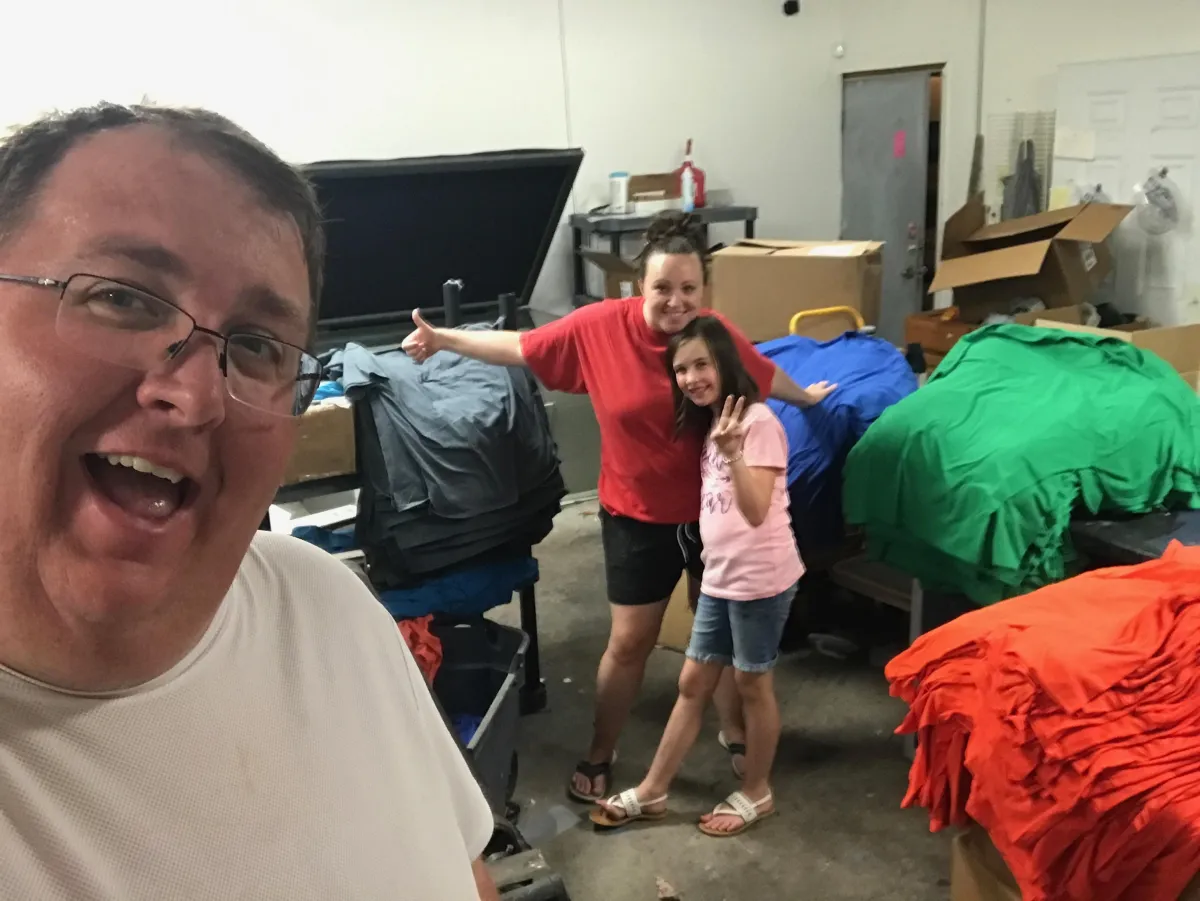
My wife and I bought a print shop in 2016. It had been running since 2002, and the first year felt like trying to live inside a paper tornado.
The business had customers, equipment, and fourteen years of goodwill in town. What it did not have was any way to know what was happening. QuickBooks held prices and nothing else. Job details lived on paper, and files lived on whichever computer someone had used last. Every question worth asking took a search to answer. How many shirts are on the floor right now. Did we ever quote this school before. Where is the artwork for the order that ships Thursday.
I spent that year drowning, and what I took away from it mattered more than anything else I learned about printing. The problem was not volume. It was that I could not see.
So I put in Printavo to track jobs through production and moved every file to Dropbox so location stopped being a question. Neither one fixed the business. Both of them meant I finally had data.
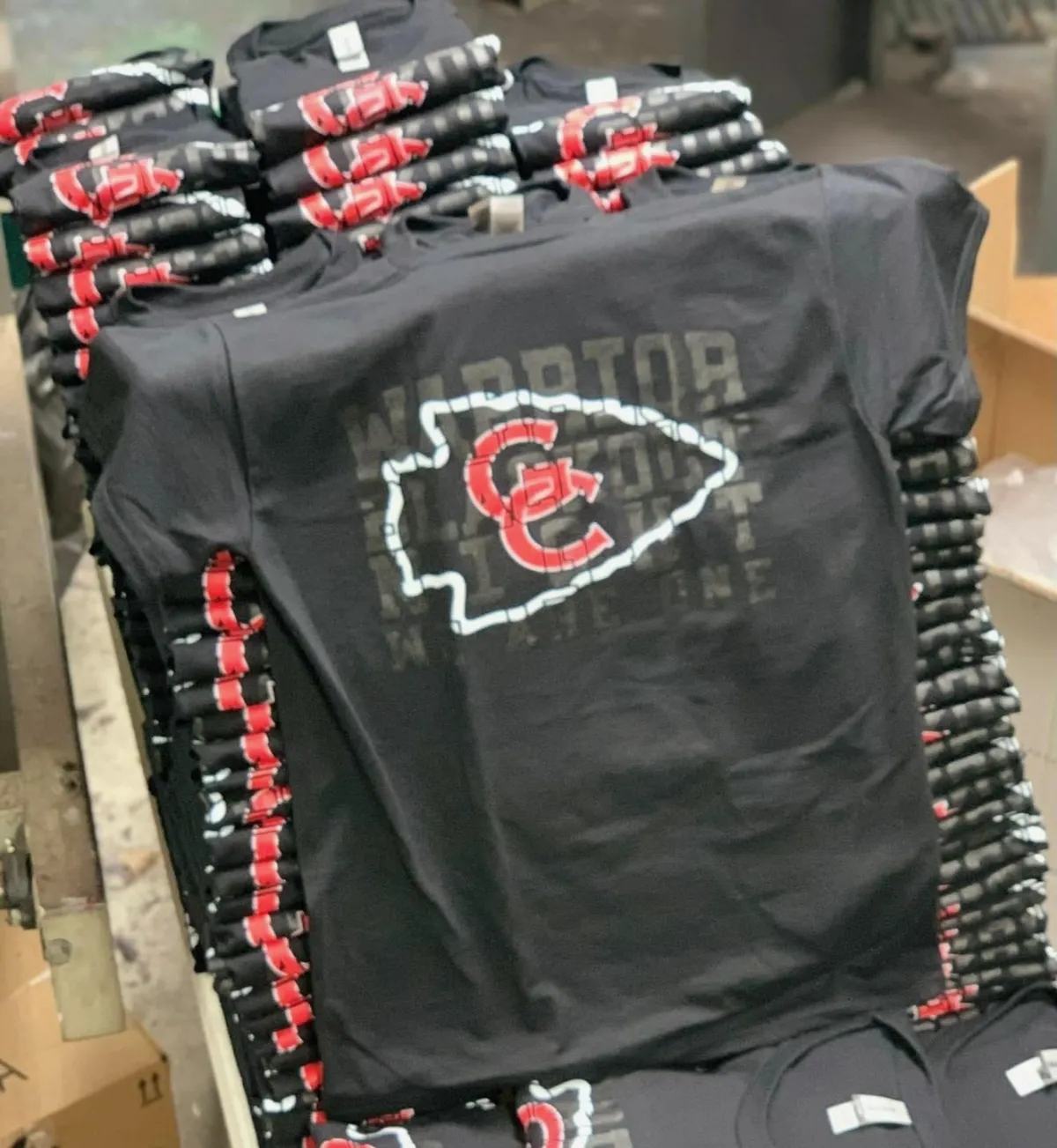
The first thing I did with that data was get out of a fight I could not win.
The shop had been in a price war with another printer in town since before we bought it, and the whole strategy was being the cheapest option available. That works right up until someone asks what a job costs to produce, and nobody had ever asked. Once Printavo showed me real numbers per job, I stopped setting prices against the other shop and started setting them against our own quality. Not high. Just honest. And I quit worrying about what they were charging.
We lost a few jobs on price. Most people stayed, and some of them told us why. They wanted the work done right and they wanted to be taken care of.
That spine held for eight years. It also turned out to be a rehearsal. In 2024 I walked into a plumbing company with the same condition in a different industry, and I recognized it right away.
Selling More to the People Already Walking In
In 2018 I bought the Collinsville Sports Store. I did not open a second location. I moved the trophy equipment and supplies into our building and started making awards for rec clubs, leagues, and local organizations.
That set the pattern for the next four years. Every machine I bought after that let me sell something new to a customer I already had.
2018 - Trophies - The team that ordered jerseys now ordered the awards too.
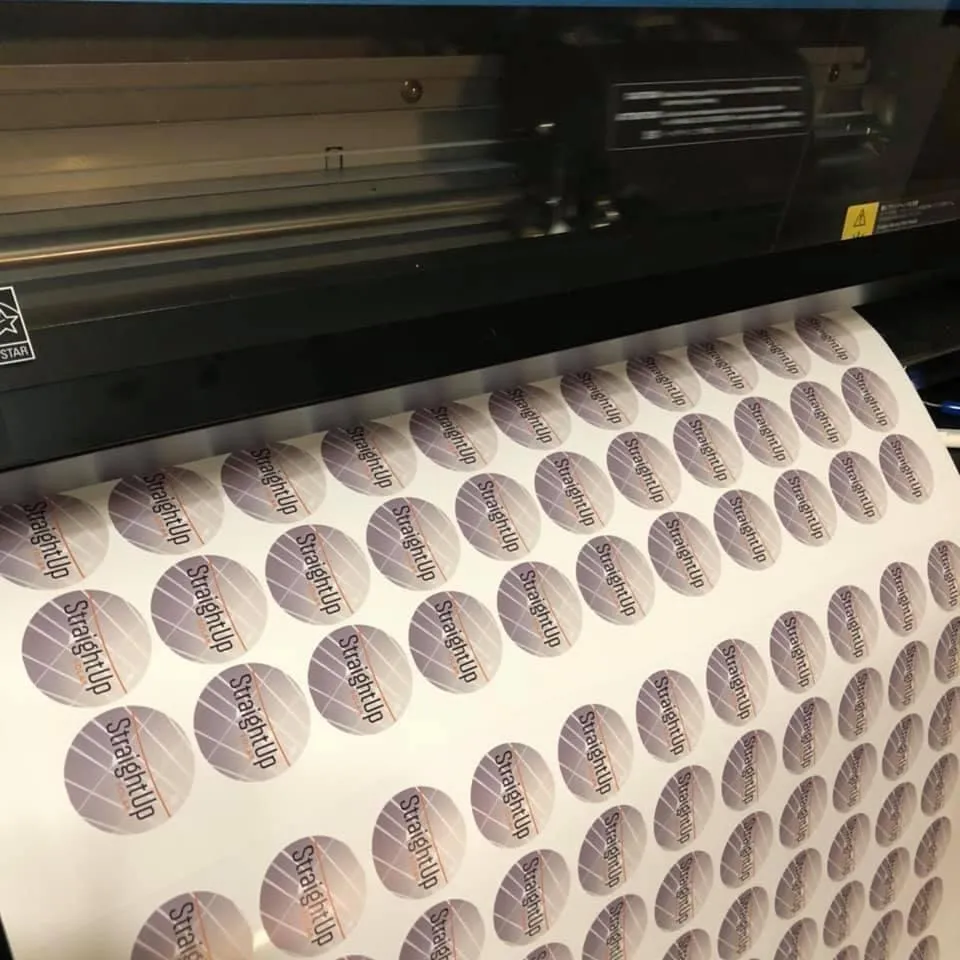
2020 - Roland BN-20 - Stickers, Decals, Small Format Banners and Printable Shirt Transfers
2021 - Used HP 360, Laminator and Large Graphtec - Banners and Window Graphics - More for our Business Clients and Teams
2022 - February - Sublimation for Plaques, Cups and Promotional Items
2022 - August - DTF Transfer Printer - Portable prints for live events and better numbers and names on Jerseys
2023 - Laser Engraving for Cups and other promotional items
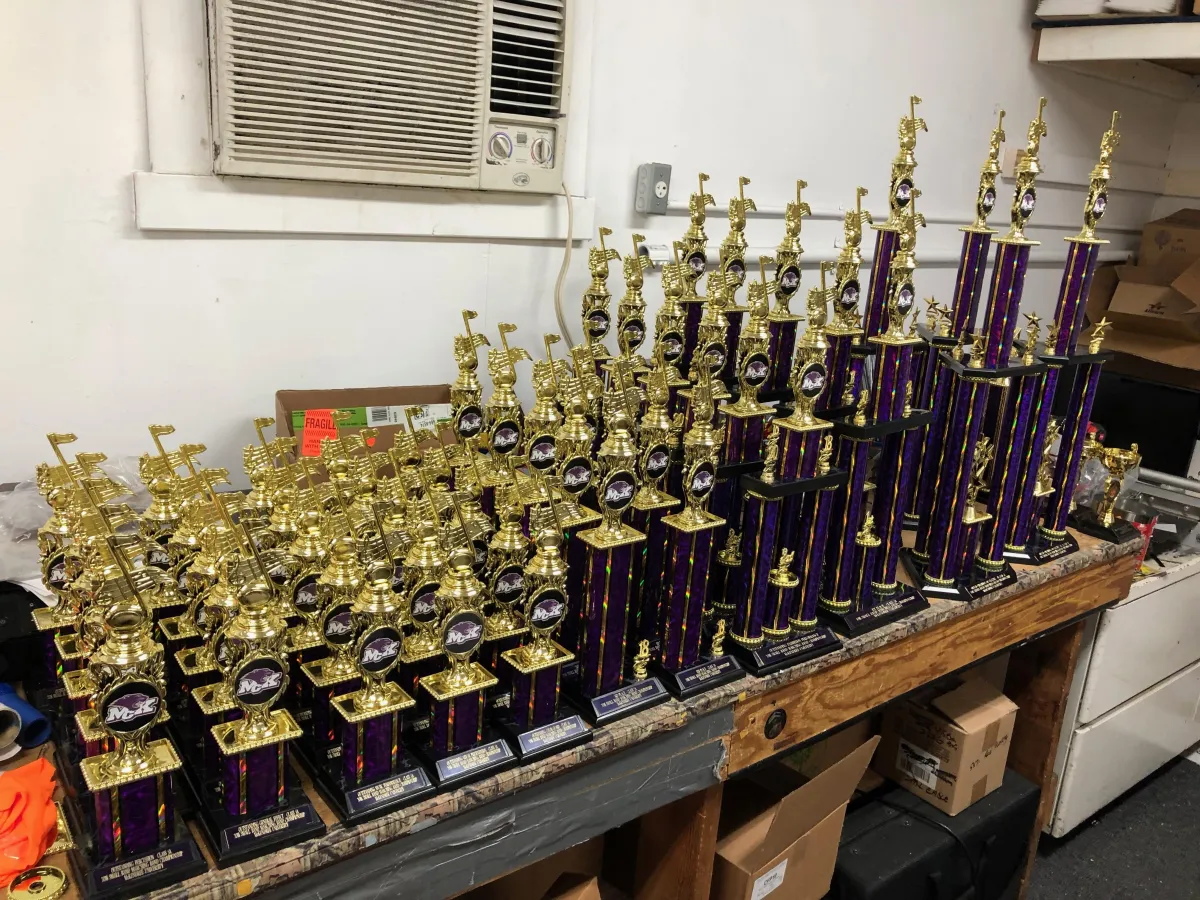
None of those purchases chased a new audience. Each one raised what an existing customer could spend with us in a year. Three of them landed during or right after 2020, which made them defensive as much as expansive.
2020
The year opened well. Then COVID hit, and the assumption underneath a custom apparel shop broke. Events stopped. People stayed home and started making things themselves. It was the hardest year I had in business.
We adapted three times.
We printed Healthcare Hero shirts and sold them to hospitals and healthcare facilities while the demand was real. We designed a run of pieces for people stuck at home, playing on the funny and sad edge of it, including a set built around Coronacation. And we brought in the Roland so stickers could carry weight while apparel could not.
None of that replaced what we lost. All of it kept the doors open, and the shop ran four more years.
2021 - Getting the Legs Back
We leaned into the work that had held up. Craft fair tees and homeschool designs, both of which sold to people rather than to institutions, and both of which came back every season.
The HP 360 opened banners and large window graphics. And we started promoting Hot off the Press, our live on-site printing service, at wrestling tournaments, marching band competitions, and library summer reading programs.
Live printing solved a problem the shop had always had. A tournament happens on Saturday, the crowd is there once, and a two-week turnaround misses it entirely. Printing on site put the product in front of people while they still wanted it.
Athlete of the Month
In February 2022 I built a recognition program for Collinsville High School and offered it at no cost through the end of the school year. Two athletes a month, one male and one female. Each one received a shirt or jacket in school colors and an award plaque carrying both the school logo and the program logo. We shared each one across our social channels.
The sublimation equipment made the plaques cheap enough to give away.
This helped me attempt to build a relationship in the school with the athletic department and goodwill in the community for people to look to us for their apparel needs.
Closing the Counter
By October 2022, Illinois minimum wage was climbing toward $15 and staffing the front counter well had become hard. Walk-in traffic ate hours that production needed, and the two obvious answers were raise prices or absorb the margin.
I took a third one. We went appointment only, effective immediately.
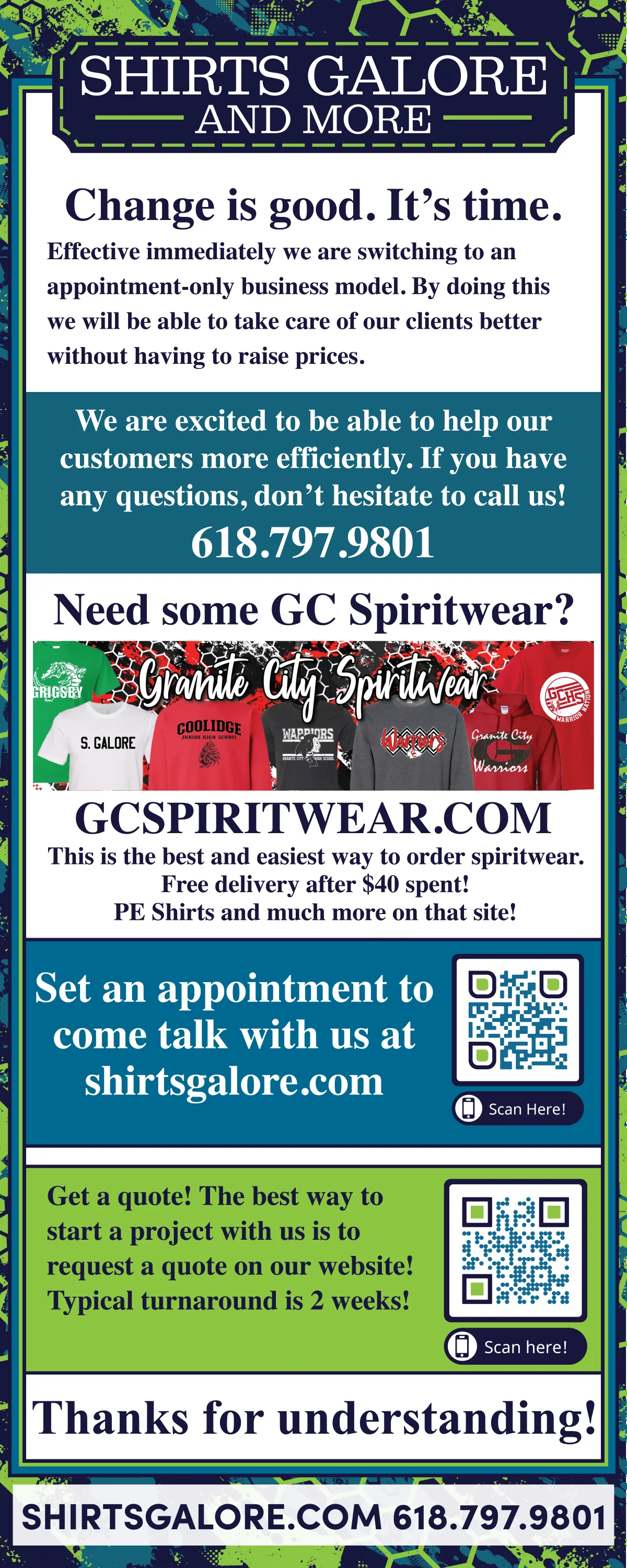
Then I designed the announcement myself, which was the harder half. Telling customers they can no longer walk through a door they have used for twenty years is a message that can go wrong in a hurry. So the flyer led with the reason instead of the rule: appointments let us take better care of clients without raising prices. It pointed people to gcspiritwear.com for school spirit wear, put a QR code on scheduling an appointment and another on requesting a quote, stated the two-week turnaround up front, and thanked people for understanding.
Removing the walk-in path meant every other path had to be easier than the one I took away.
It also worked for the same reason the pricing decision worked four years earlier. Our customers were choosing us on quality and care. They accepted less convenience because neither of those changed.
Four Doors
By July 2023 the name was working against us. Shirts Galore and More sounded like what it was, a 2002 storefront, and it flattened four very different kinds of buyers into one message.
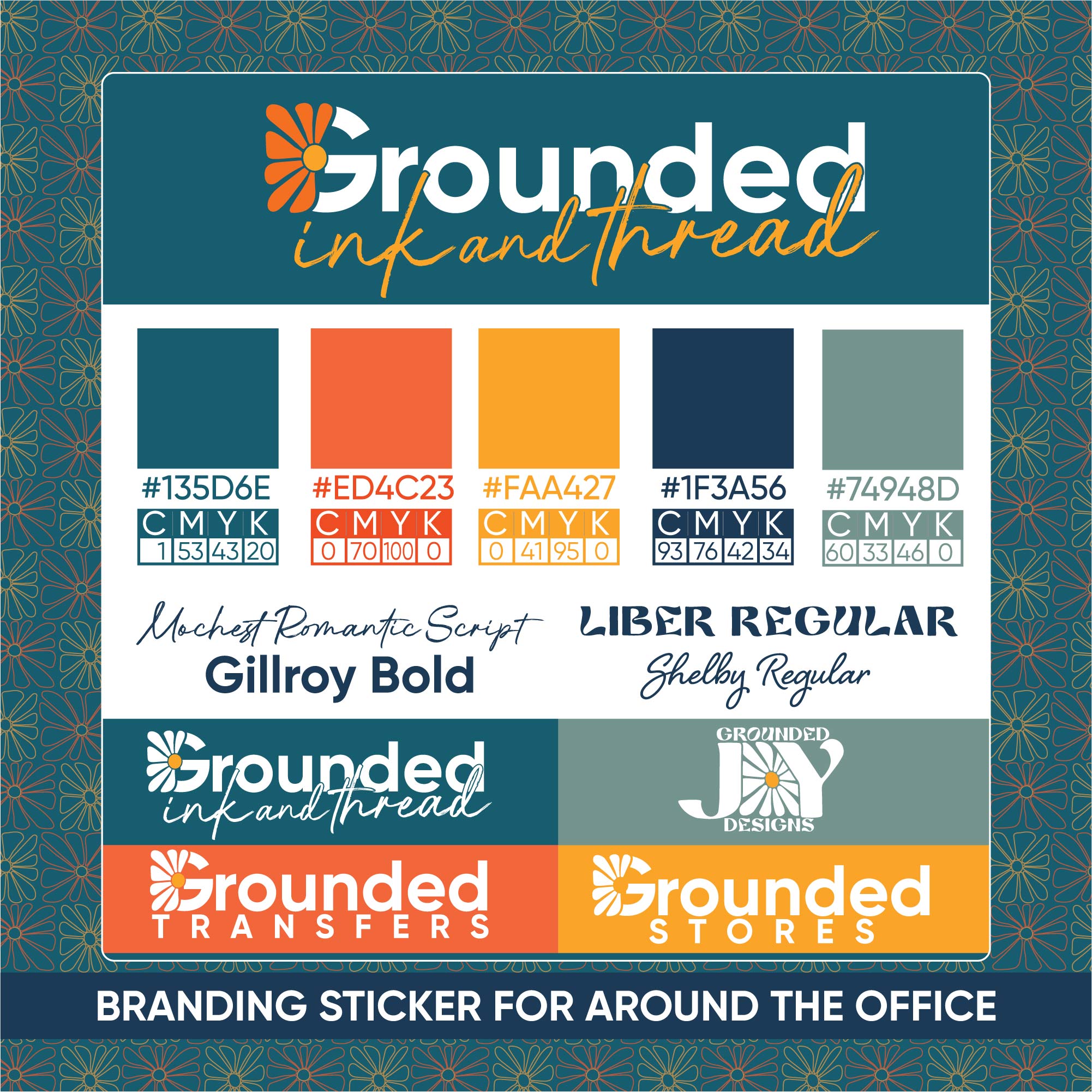
Seven years of Printavo data told me who those buyers actually were. So the rebrand split them.
Grounded Ink and Thread carried custom apparel and the parent identity.
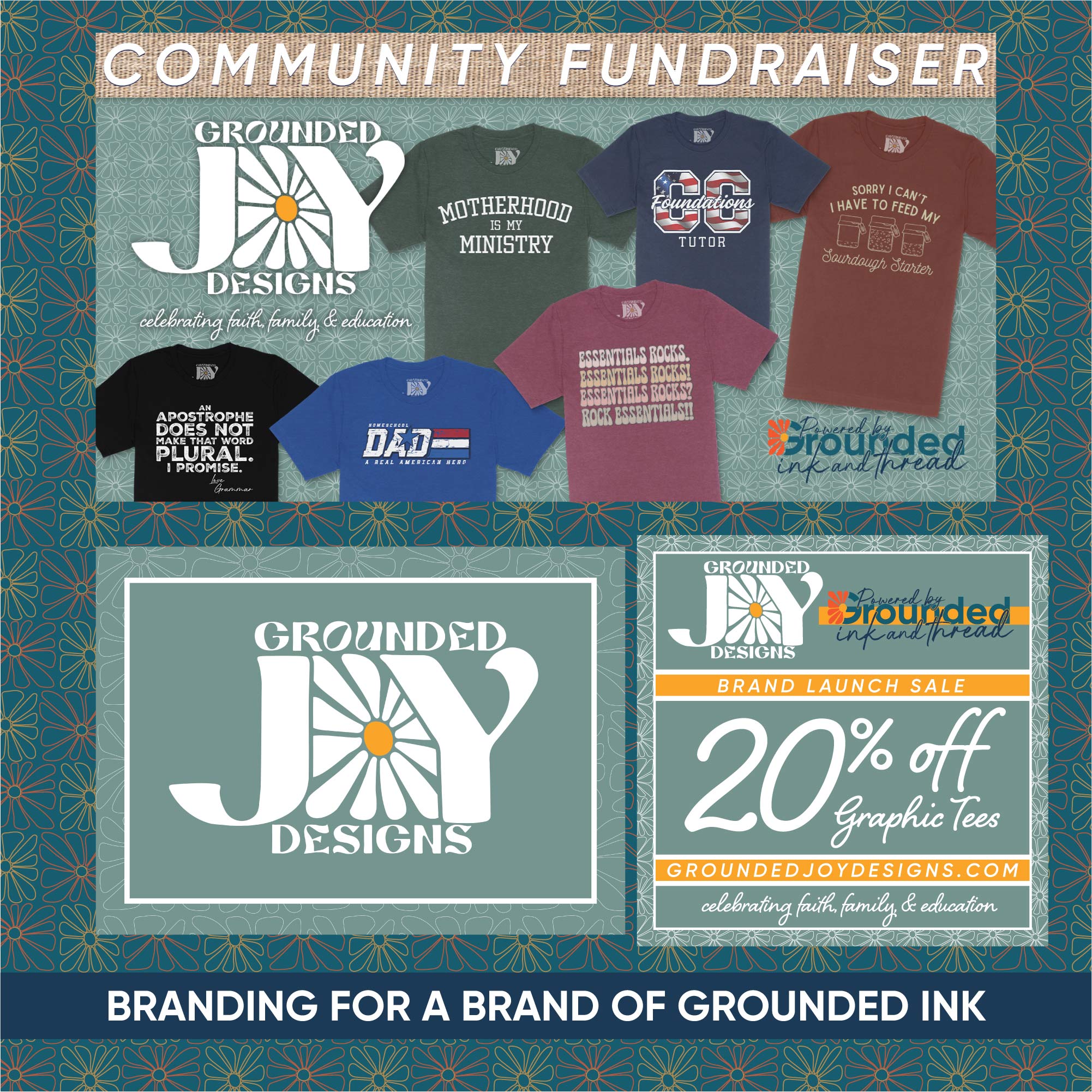
Grounded Joy Designs sold finished designs to homeschool families at conventions. That buyer shops a booth, decides in a minute, and returns the next year.
Grounded Transfers supplied DTF wholesale to other shops and to individuals. It also housed the live printing service.
Grounded Stores ran fundraising and corporate group stores. That buyer is a volunteer parent or a booster president who has been handed a job nobody trained them for.
Four brands, four front doors, four different first steps to service. A homeschool mom at a convention booth and a shop owner buying transfer sheets would never have walked through the same one.
The Fundraising Store Model
Grounded Stores became the biggest piece of the business, and it grew out of a specific frustration. Group fundraising apparel is a coordination problem wearing a printing problem's clothes. Somebody collects sizes on paper, somebody chases the last four families, somebody sorts 200 shirts on a gym floor. Also ran stores through Grounded Joy Designs for Homeschool Group Fundraisers
Four decisions solved most of it.
Two-week store windows. Every store opened and closed on a fixed date. Deadlines produce orders, and a closing date gave the volunteer running it something concrete to push in a group text.
Free setup, paid production. I built the store, loaded the designs, and charged nothing for it. The money came out of what got printed. That removed the conversation where a booster club has to approve a setup fee before anyone knows whether the thing will sell.
Original designs per store, spread across products. Each store got designs I drew for that group, applied across tees, hoodies, tumblers, and whatever else fit. Three decisions for the buyer instead of thirty.
Pre-sorted fulfillment by group leader. Orders arrived bagged and grouped, so nobody sorted anything on a gym floor.
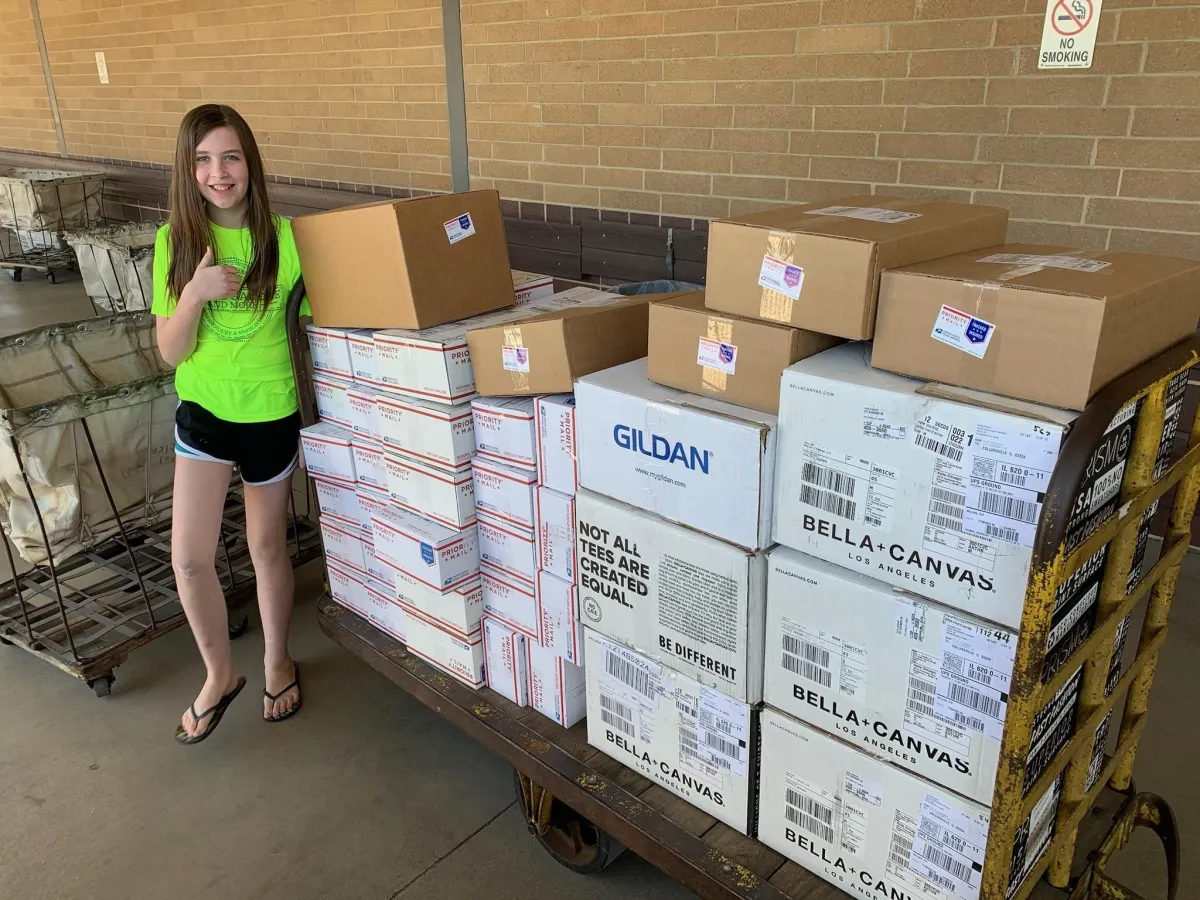
Across 450+ stores we fulfilled 10,000+ orders and paid out more than $75,000 to schools, teams, churches, and homeschool groups. The payout number is the one I care about, because that money went to them.
How it Ended
The storefront closed in 2024 and the building sold. There was no dramatic last day. Print shop economics had been narrowing for years, and I had spent most of the last three solving the same problem over and over. The business did not need more orders. It needed systems that told me what was actually happening.
That was the work I kept getting pulled back to. Not the press. The visibility.
Eight years of it taught me what a small business owner is really carrying, and it is almost never the thing they call about. They call about a website or a logo or a slow month. What they are holding is the suspicion that something is wrong and no way to find out where.
I would rather do that work for other people now than keep proving it on shirts. I want to help small business owners know that they will be okay.
What I Would Do Differently
I waited seven years to rebrand. The four buyer types were visible in the data long before 2023. Shirts Galore had local equity and I was reluctant to spend it, which is a defensible instinct and probably cost me three years of targeted marketing to the homeschool and wholesale segments.
Ryan Wisnasky • Creative Marketing Strategist • Collinsville, IL • [email protected]